A modular way to adapt AI models: transplanting trained “organs” between systems
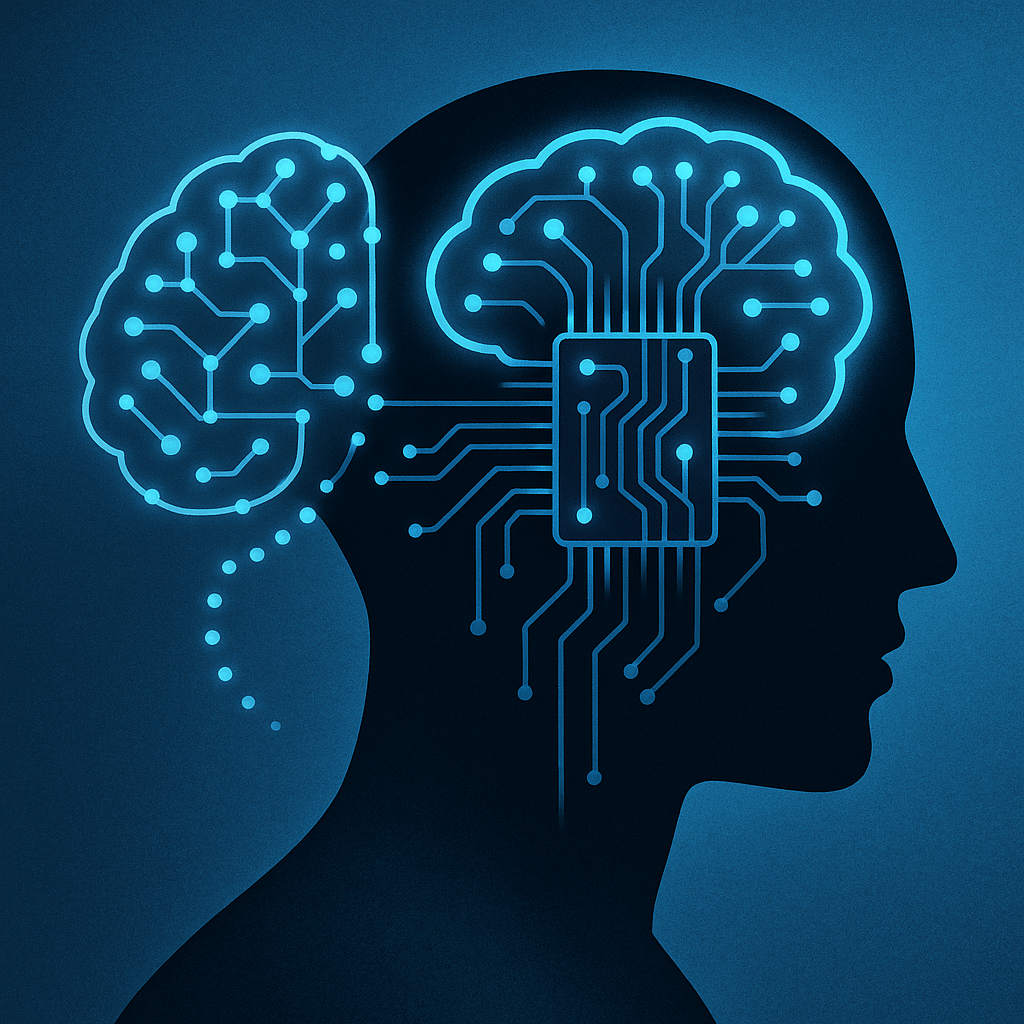
A new study proposes a practical way to adapt large language models by moving trained slices of them between compatible models—much like transplanting an organ. The method promises better accuracy with less training and lets organisations share expertise without handing over their original data. If it works broadly, updating models for new tasks could become simpler, faster and more private.
Why this is in the news
The approach, called Neural Organ Transplantation (NOT), appears in a preprint on arXiv by researcher Ahmad Al‑Zuraiqi. The preprint does not list a university affiliation. It arrives as many teams look for lighter, modular ways to update rapidly growing models without retraining them from scratch or moving sensitive datasets.
The structural problem the authors describe
Today, the standard way to adapt a model—fine‑tuning—tightly binds the new learning to one specific model and to the data used. The result is hard to reuse elsewhere, and often requires access to the original model and sometimes the data. NOT reframes this: it trains a contiguous set of layers (the “donor organ”) on domain‑specific text, saves it as a standalone checkpoint file (a snapshot of learned settings), and then inserts that file into another, compatible model (the “recipient”) without needing the original data.
A concrete example
Imagine a hospital trains a small language model segment on radiology reports. That trained segment is saved and sent as a checkpoint. A larger, compatible model at another site “receives” the segment, which improves its radiology writing and understanding—even though the larger model never saw the hospital’s patient data and the full original model never leaves the hospital.
Why AI can behave differently depending on placement
The study reports that where the donor is inserted matters. Early positions in the model tend to work best, and middle layers often carry transferable “skills.” The method worked across several decoder‑only language models (a common type of text generator), and in tests it beat a popular lightweight technique (LoRA) on a standard prediction score while training faster. In some billion‑parameter cases, moving a donor from another domain even reduced overfitting (a simple form of regularisation). Early trials on other model types were less effective.
Key risk: compatibility, scope and limits
The main caveats are technical. NOT currently applies to decoder‑only architectures and depends on model compatibility and insertion position; the wrong fit can harm results. These are limits rather than safety hazards, but they define where the method is reliable.
What the authors suggest as a path forward
The study’s central suggestion is practical: use small, shareable checkpoints to distribute domain expertise while keeping original data local. In practice, this calls for careful compatibility checks, versioned checkpoints, targeted evaluation before deployment, and the option to remove or roll back a donor if quality drops.
In short
Transplanting trained “organs” between compatible AI models could make domain adaptation faster, more accurate and more privacy‑preserving—provided we respect the method’s limits on model type and placement.
In a nutshell
A modular “organ transplant” for AI lets teams move trained parts between compatible language models, improving domain skills without sharing the original data.
What to understand
- You can save a trained layer block as a checkpoint and plug it into another compatible model to share skills.
- In tests, this beat a common lightweight method and trained faster, especially when inserted early in the model.
- The approach currently fits decoder‑only models; careful compatibility and placement checks are essential.
Paper: https://arxiv.org/abs/2601.13580v1
Register: https://www.AiFeta.com
AI research languagemodels transformers arxiv privacy