AI that designs enzymes—and explains why
AI that designs enzymes—and explains why
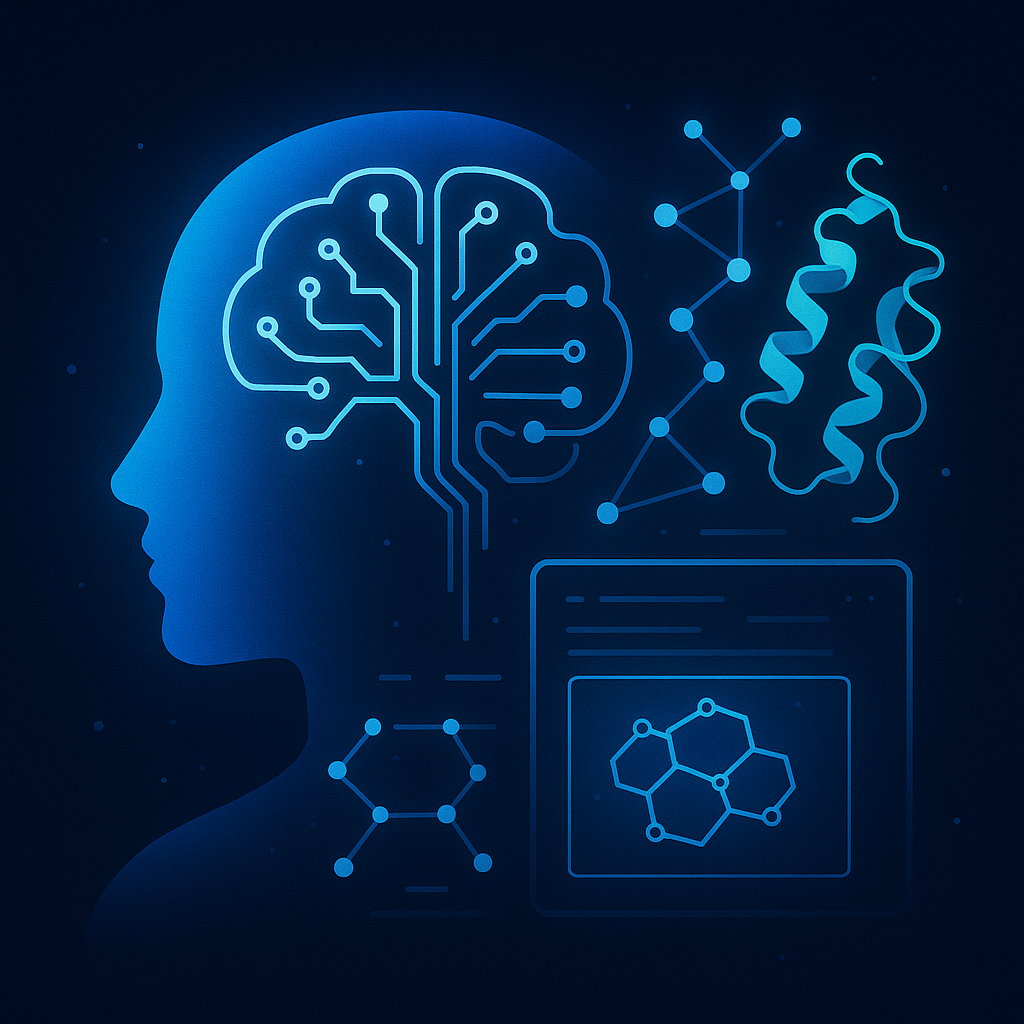
Researchers introduce Genie-CAT, an agentic large language model that acts like a digital lab partner for protein design.
- Reads the literature via retrieval to ground its ideas.
- Parses 3D structures from the Protein Data Bank.
- Computes electrostatic potentials to assess physics.
- Uses machine learning to predict redox properties.
Working on metalloproteins such as ferredoxins, Genie-CAT links sequence, structure, and function to propose mechanistic, testable edits—like specific amino acid changes near iron–sulfur clusters to tune redox potential. In demos, it reproduced expert hypotheses in a fraction of the time.
Why it matters: instead of a chatty assistant, this shows how tool-using AI agents can couple language-based reasoning with numerical simulation, turning LLMs into partners for computational discovery.
Paper: https://arxiv.org/abs/2511.19423v1
Paper: https://arxiv.org/abs/2511.19423v1
Register: https://www.AiFeta.com
AI AgenticAI LLM ProteinDesign EnzymeDesign ComputationalBiology Metalloproteins Redox Science