AI that jointly assesses chronic diseases and depression from wearables
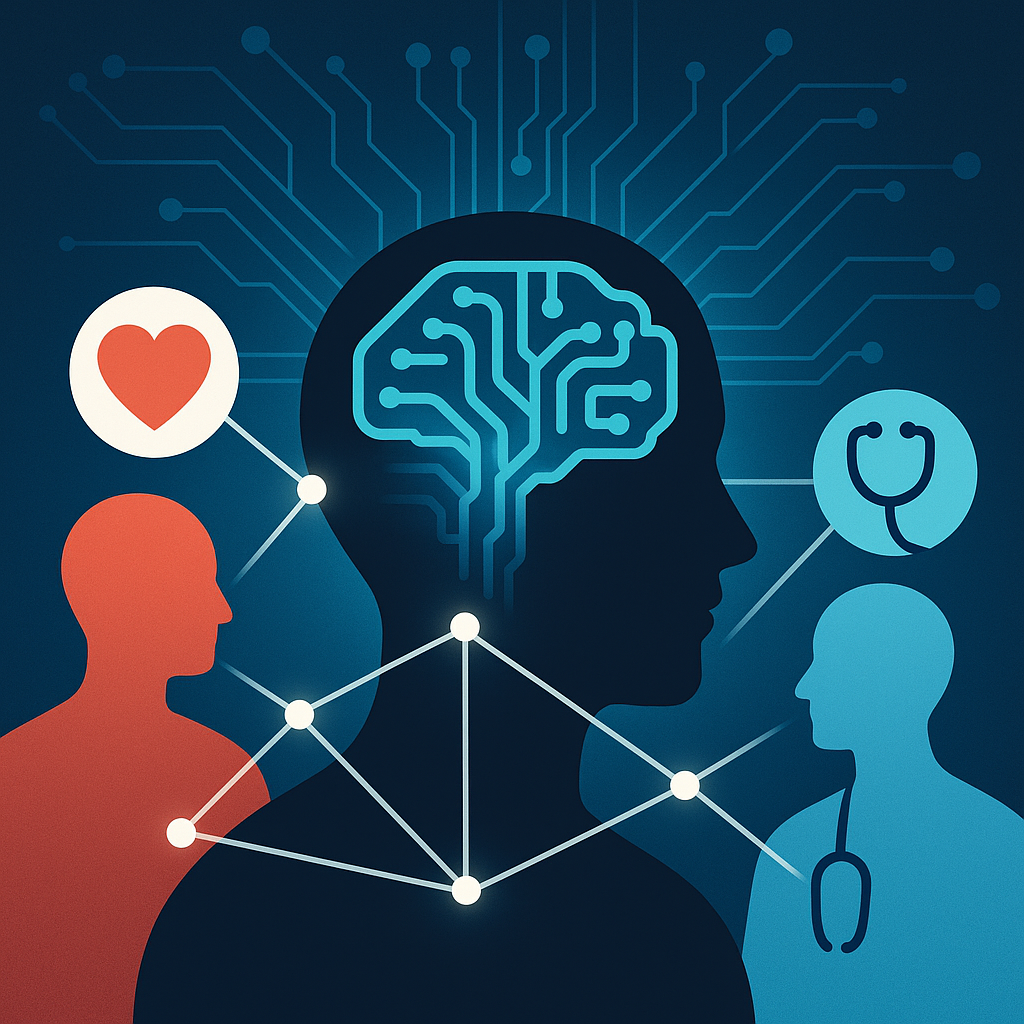
Wearables are reshaping healthcare, but most AI models track one physical condition at a time and overlook depression—despite frequent overlap.
This study reframes multi-disease assessment as a multi-task learning problem, letting one model learn several conditions jointly and use their relationships to improve accuracy.
The catch is “double heterogeneity”: diseases behave differently, and so do patients with the same disease. Enter ADH‑MTL, a method built for both:
- Group-level modeling to generalize to new patients without long personal histories.
- Decomposition to reduce model complexity while preserving key signals.
- Bayesian network to capture dependencies and balance what’s shared vs. unique across tasks.
On real-world wearable data, ADH‑MTL outperformed existing baselines, and each innovation proved effective.
Why it matters: a computational path toward integrated physical and mental healthcare across pre-, during, and post-treatment phases.
Paper: https://arxiv.org/abs/2511.16398v1
Paper: https://arxiv.org/abs/2511.16398v1
Register: https://www.AiFeta.com
AI Healthcare Wearables MentalHealth ChronicDisease MachineLearning MultiTaskLearning DigitalHealth