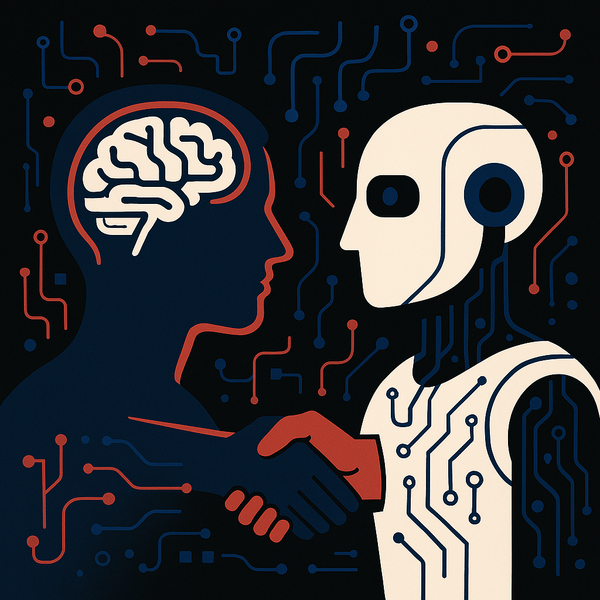
AI that responds to feelings adds a safety check before it speaks

A new study presents an AI system that listens for emotion in a person’s voice and instantly adjusts what it shows or plays. The design adds a safety check before any content reaches the user. This matters as emotionally responsive toys, apps and smart speakers move into homes, schools and clinics.
Why this is in the spotlight
The preprint, posted on arXiv in January 2026 by researcher HyeYoung Lee, argues that most work on emotion AI focuses on lab accuracy, not on what the system actually does next. The paper does not list a university affiliation. It proposes a practical way to turn inferred feelings into content that is age-appropriate and controllable.
Why AI can behave harshly
The authors describe a structural issue: systems often chain several steps—detect an emotion, choose a response, generate content—but treat safety as an afterthought. Small errors early in the chain can snowball into harmful outputs. To address this, the design uses several small AI programs that work together (“multi-agent”): one listens for emotion in speech, one decides the response type, one sets content parameters, and one checks safety. The safety check runs in a loop before output and enforces simple rules on age suitability and stimulation levels.
A concrete example
Consider a children’s music app that hears frustration. Without guardrails, it might raise the volume, flash intense visuals or try to pressure the child: “Calm down or the game stops.” That can feel like a threat. In the proposed system, the safety agent would block that wording, cap volume and visual intensity, and switch to a neutral, calming mode.
Key risk: speed and scale
The system runs in under 100 milliseconds (a tenth of a second) and can live on a device. That speed is useful, but it means reactions happen before adults can intervene, and, if widely deployed, small design errors can be repeated at scale. The model’s emotion accuracy was 73.2% in tests—good, but not perfect—so safety cannot rely on being right every time. This is especially important in child-facing and therapeutic uses.
What the authors propose as safeguards
The paper’s core proposal is a real-time verification loop that filters content before output and enforces simple rules. The modular design makes each step visible and testable, which helps oversight. In experiments, the system delivered 89.4% consistency in response choice and 100% compliance with its safety rules while staying under the speed target.
In summary
The study shows that making systems fast does not have to mean making them risky. Safety comes from the architecture: clear rules, checks before output and parts that can be inspected. As such systems enter everyday devices, independent testing with diverse users will be the next necessary step.
In a nutshell: An AI design that turns voice-detected emotions into content adds a real-time safety check to keep outputs age-appropriate and under control.
- The focus shifts from “Can the system detect emotion?” to “What should it do next—and is that safe?”
- Safety is built as a loop before output, not a last-minute filter; in tests it met its own rules every time.
- Main concern is speed and scale in sensitive settings; a modular design makes oversight and auditing easier.
Paper: https://arxiv.org/abs/2601.13589v1
Register: https://www.AiFeta.com
ai emotions safety research childtech arxiv