From generative AI to the brain: five takeaways
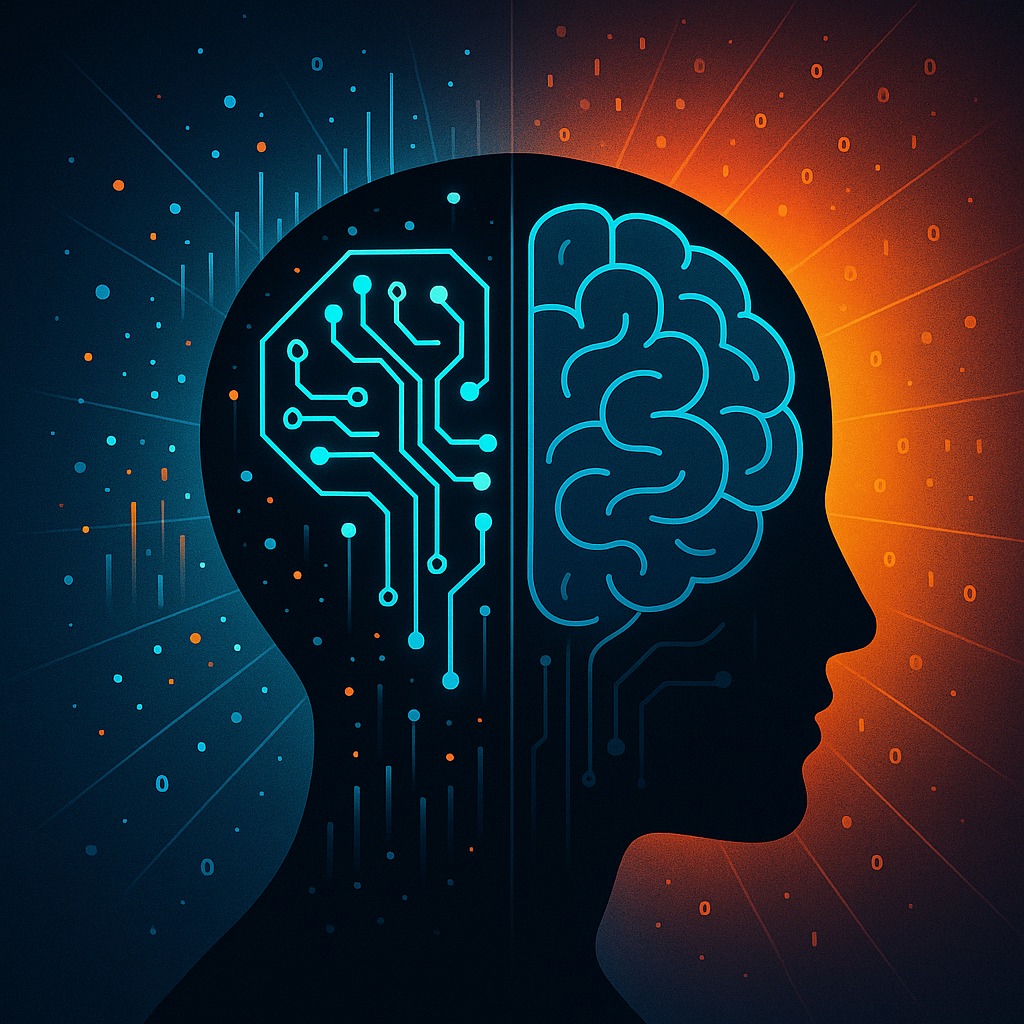
What if the brain builds and tests ideas the way modern generative AI produces images and text? A new paper by Claudius Gros argues that clear, testable generative principles—not obscure tricks—drove AI's leap, and neuroscience can probe whether similar rules guide the brain.
Five takeaways
- World models: Brains may not need perfect world models; like AI, they can get far with good-enough predictions and priors.
- Generation of thought: Cognition may work by sampling trains of thought, not by finding a single optimum—generate, then select.
- Attention: Attention routes and compresses information, spotlighting what matters while saving compute.
- Neural scaling laws: Bigger models improve predictably—until data or compute bottlenecks—hinting at similar brain-resource trade-offs.
- Quantization: Low-precision signals can work remarkably well, suggesting the brain may rely on coarse codes to stay efficient.
Bottom line: Machine learning now offers concrete, testable hypotheses for neuroscience. Bridging the two could reveal how minds generate, filter, and scale thought. Read: https://arxiv.org/abs/2511.16432v1
Paper: https://arxiv.org/abs/2511.16432v1
Register: https://www.AiFeta.com
ai neuroscience generativeai brain machinelearning attention scalinglaws quantization worldmodels cognition