Why AI Agent Collectives Need an Interactionist Lens
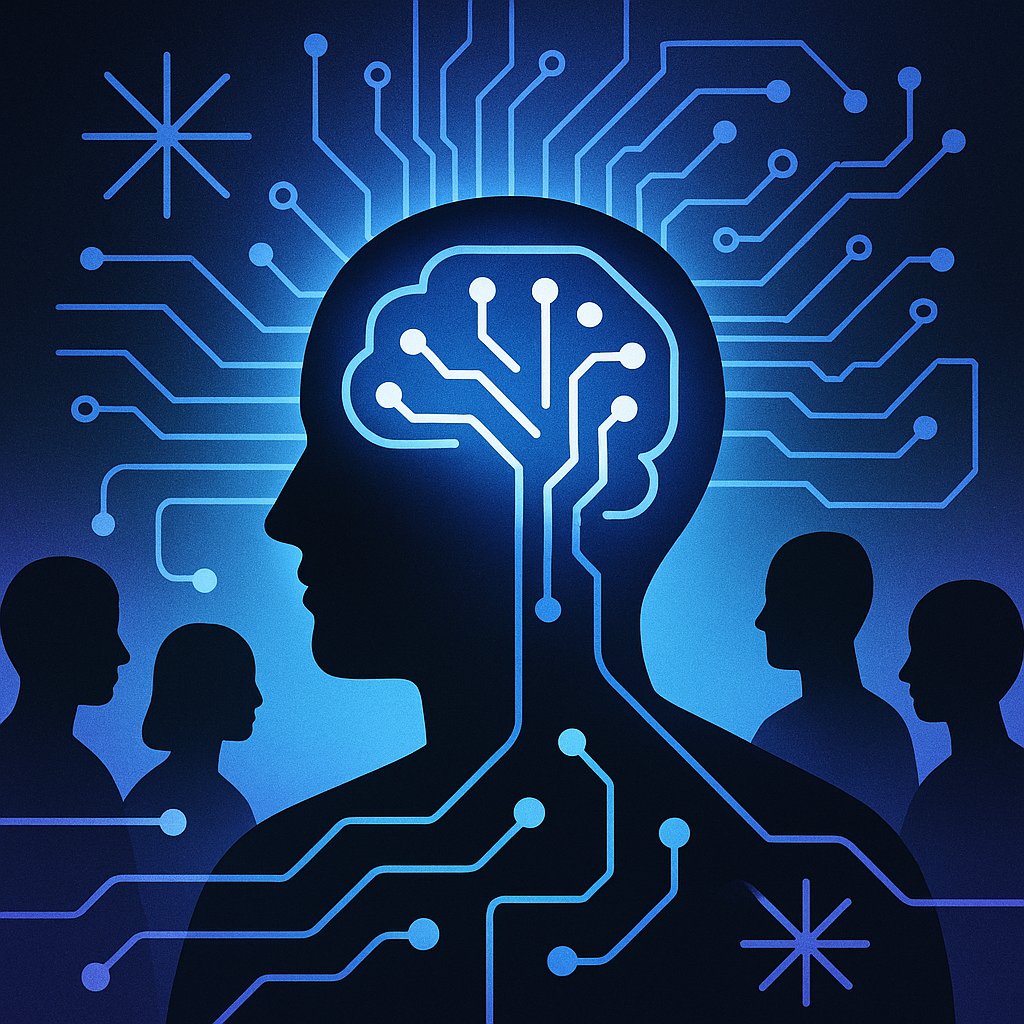
When AI agents team up, surprising things happen
Large language models don’t start from scratch. They arrive preloaded with vast knowledge and social priors, and they adapt quickly from context. When many such agents interact, their group behavior can surprise us—for better or worse. A new paper argues we need an interactionist paradigm to study how prior knowledge and embedded values meet social context to shape what emerges.
The authors outline four priorities for research and deployment of LLM-based collectives:
- Theory: Build models linking agents’ priors, roles, and interaction patterns to group outcomes.
- Methods: Create experiments, benchmarks, and tools to detect, measure, and reproduce emergent behavior.
- Governance: Assess risks and benefits and design safeguards at the multi-agent system level.
- Trans-disciplinary dialogue: Connect AI with social sciences, ethics, and policy to steer development.
Understanding collective AI is how we harness coordination and creativity while managing bias, manipulation, and failure.
Paper: arxiv.org/abs/2601.10567
Paper: https://arxiv.org/abs/2601.10567v1
Register: https://www.AiFeta.com
#AI #LLM #MultiAgent #CollectiveBehavior #AIResearch #AISafety #Ethics #Society #HCI